For the past few years, the AI story has mostly lived on a screen.
We asked chatbots to write, summarize, analyze, code, search, brainstorm, tutor, and organize information. That was a huge shift.
But the next major AI leap may not be another chatbot at all.
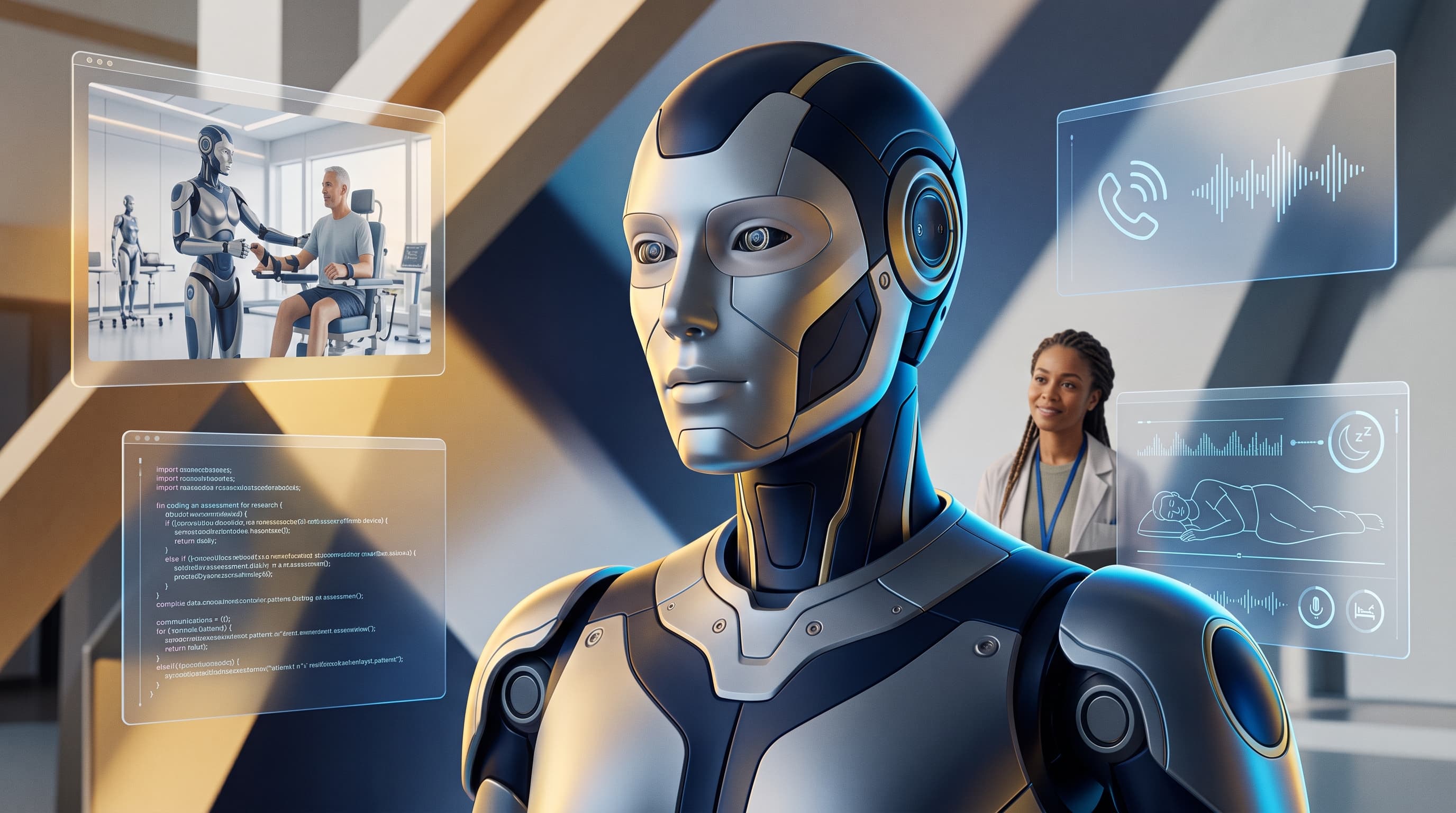
It may be a robot that can understand the world well enough to act in it.
At the 2026 World Robot Conference in Beijing, ACE Robotics chairman Wang Xiaogang told Reuters that he expects humanoid robot “brains” to reach a ChatGPT-like breakthrough by the end of 2027. His prediction centers on embodied intelligence: AI systems that combine perception, multimodal understanding, simulation, environmental data, and action planning. Reuters reported the comments on August 21, 2026.
That phrase — “ChatGPT moment” — is doing a lot of work.
ChatGPT did not invent language models. It made them feel useful, accessible, and suddenly unavoidable to ordinary people.
Robotics may be approaching a similar kind of threshold.
Not because humanoid robots are ready to take over the world.
They are not.
But because the missing piece may be shifting from the robot’s body to the robot’s brain.
The Body Is Getting Better. The Brain Is the Hard Part.
Humanoid robots already look impressive at conferences.
They walk.
They wave.
They dance.
Some can lift objects, follow simple commands, or demonstrate carefully staged tasks.
But real life is much harder than a demo floor.
A robot in the real world has to deal with:
cluttered rooms
unexpected obstacles
slippery objects
uneven surfaces
unclear human instructions
changing light
fragile items
children, pets, and moving people
objects it has never seen before
That is where robotics becomes much more difficult than chatbot AI.
A chatbot can generate a paragraph even if it is slightly wrong.
A robot that misunderstands the physical world can drop something, bump into someone, damage property, or fail at the task entirely.
Language AI learned from enormous amounts of text, code, images, and video.
Robotics needs something harder:
perception → spatial reasoning → planning → movement → feedback → correction
That is why companies are now focused on embodied AI and world models.
A world model is an AI system that attempts to represent how the physical world works: how objects move, how actions produce consequences, and what is likely to happen next. The Wall Street Journal described this broader shift as AI’s move from language toward systems that can understand and act within three-dimensional environments. The Wall Street Journal reported on world models and robotics on August 21, 2026.
In simple terms:
A chatbot predicts words.
A robot needs to predict what will happen if it reaches, pushes, grips, turns, lifts, walks, slips, or lets go.
That is a very different kind of intelligence.
Why “Embodied AI” Matters
Embodied AI refers to intelligence that is connected to a body or physical system.
That body might be a humanoid robot, a warehouse robot, a robotic arm, a delivery robot, or even a future home assistant.
The key idea is that the AI is not only producing answers.
It is acting in the world.
That creates a new kind of AI workflow:
see → understand → plan → act → sense feedback → adjust
This is why robotics may become one of the most important next chapters in artificial intelligence.
The first generative AI wave changed information work.
The next wave could begin changing physical work.
That does not mean humanoid robots will suddenly become common in every home next year. Even optimistic robotics leaders acknowledge that broad commercialization may take years. Reuters reported that ACE expects a major breakthrough in robot brains by late 2027, while broader commercial deployment may still take another four to five years after that.
That timeline matters.
A breakthrough does not mean instant mass adoption.
It means the technology may cross a threshold where people suddenly see what it can become.
China Is Moving Fast in Humanoid Robotics
The robotics race is not just technical. It is also geopolitical and economic.
China has made humanoid robotics a major industrial priority, and Reuters has reported repeatedly on the country’s fast-growing robotics sector.
At the same World Robot Conference, Unitree CEO Wang Xingxing said robots may be approaching their own “ChatGPT moment,” but he offered a cautious timeline. He suggested that major advances could still take anywhere from two to ten years, especially because robots still struggle to reliably complete tasks in unfamiliar real-world environments. Reuters covered Unitree’s comments on August 20, 2026.
That caution is important.
The industry is excited, but the hard problems are still real.
The Associated Press also reported from the 2026 World Robot Conference that China displayed around 3,000 robotic products, including humanoid robots, robot dogs, helper robots, and emotionally expressive robots. But the report also noted the gap between spectacle and usefulness, including one helper robot that failed at folding a shirt. AP covered the conference on August 19, 2026.
That is the robotics story in one image:
The robot can perform.
But can it help?
The Business Race Is Already Starting
Even before humanoid robots become widely useful, money is moving quickly.
Reuters reported that Chery’s robotics affiliate AiMOGA is preparing for a possible IPO as it targets overseas markets. Founded in January 2025, AiMOGA has already deployed more than 3,000 robots globally, including roughly 2,000 overseas, and aims to deliver 10,000 units globally in the coming year. Reuters reported the AiMOGA IPO plans on August 21, 2026.
This is not just about building cool robots.
Companies are searching for real markets:
retail
logistics
factories
public safety
hospitality
elder care
home assistance
rehabilitation support
AiMOGA’s early uses include Chery dealerships, service roles, and public-safety applications. Reuters reported that the company has introduced humanoid police robots for tasks such as traffic management and public safety campaigns, particularly in difficult weather conditions.
This is where the conversation gets serious.
A humanoid robot in a showroom is a demonstration.
A robot helping with elder care, therapy support, warehouse tasks, or hospital logistics is infrastructure.
That is the shift to watch.
What Would a Robot “ChatGPT Moment” Actually Mean?
A robot ChatGPT moment would not mean robots suddenly become human.
It would mean robotics becomes dramatically more usable.
A true breakthrough might look like this:
A person gives a simple instruction:
“Bring me the blue folder from the kitchen table.”
The robot can:
understand the instruction
identify the room
navigate around obstacles
find the table
distinguish the blue folder from other objects
pick it up safely
carry it back
adjust if the folder is under another item
ask for clarification if needed
That sounds simple because humans do it automatically.
For robots, it is enormously complex.
The breakthrough would be moving from robots that perform scripted demonstrations to robots that can generalize across new tasks and environments.
That is why world models and embodied data are so important.
ACE Robotics told Reuters that it is collecting real-world training data from production lines using lightweight sensors and hopes to gather tens of millions of hours of data within two years. Data scarcity remains one of the robotics industry’s biggest challenges.
Robots need experience.
Not human experience, exactly.
But enough examples of bodies interacting with environments that an AI system can learn how physical action works.
Why This Matters for Health, Wellness, Autism, and Education
This topic may sound like a pure technology story, but it has enormous implications for human services.
Think about caregiving.
A future robot assistant could help an older adult by:
retrieving objects
reminding them about routines
detecting falls
supporting mobility
connecting them to caregivers
helping with simple household tasks
In rehabilitation, robots could potentially support:
repetitive motor practice
physical therapy exercises
occupational therapy tasks
gait training
adaptive equipment practice
home exercise routines
In autism and disability support, the questions become more sensitive but still important.
Could embodied AI eventually help some people with:
predictable routines
visual schedules
communication practice
sensory-friendly prompting
safe repetition
transition support
daily-living skills?
Possibly.
But the design would need to be careful, ethical, individualized, and human-centered.
A robot should not replace human care, human teaching, or human relationships.
The better question is:
What support tasks could robots assist with so humans can spend more time doing the relational, creative, and judgment-heavy work only humans can do?
That is the same question we should be asking about AI in education, therapy, wellness, and caregiving.
Not:
Can AI replace people?
But:
Where can AI reduce burden while protecting human dignity, autonomy, and connection?
The Risk: Hype Will Arrive Before Usefulness
Every major AI wave brings hype.
Robotics may bring even more because humanoid robots are visually irresistible.
A chatbot screenshot is not very exciting.
A humanoid robot walking across a stage is impossible to ignore.
But attention is not the same as usefulness.
A robot that dances beautifully may still be unable to safely help a person transfer from a chair.
A robot that performs a conference demo may fail in a cluttered bedroom.
A robot that speaks fluently may not understand a child’s sensory needs, a patient’s fatigue, or an older adult’s fear of falling.
So we need a better evaluation standard.
Do not ask only:
Does the robot look impressive?
Ask:
Can it perform a meaningful task safely, reliably, affordably, and repeatedly in a real environment?
That is the difference between spectacle and service.
What Builders Should Learn From Robotics
For digital-product builders, robotics offers a huge lesson.
The most valuable AI products often do not stop at generating an answer.
They complete a workflow.
That is exactly what robotics is trying to do in the physical world.
A chatbot might say:
“Here is how to organize your kitchen.”
A robot might eventually:
see the kitchen, identify the objects, sort them, ask what matters, and physically move them.
That is the difference between information and action.
The same principle applies to digital products.
A weak AI app gives the user an output.
A stronger AI product helps the user complete the job.
For example:
Research tool: not “summarize this paper,” but “find, compare, cite, and organize the evidence.”
Teaching tool: not “write a quiz,” but “turn a reading into objectives, lecture notes, discussion, activity, quiz, and study guide.”
Wellness tool: not “give advice,” but “track patterns, suggest skills, support reflection, and escalate when needed.”
Creator tool: not “write a script,” but “generate the script, b-roll, thumbnail, description, clips, and publishing checklist.”
Robotics makes this lesson concrete.
AI gets more valuable when it moves from answering to doing.
Final Thought
Robots may be about to have their ChatGPT moment.
But the real breakthrough will not be that a humanoid robot can talk like a chatbot.
The real breakthrough will be when robots can understand enough about the physical world to help safely, reliably, and meaningfully.
That future is not here yet.
But the race is clearly underway.
And if the first generative AI wave taught us anything, it is this:
once a technology becomes useful enough for ordinary people to understand what it can do, the world starts reorganizing around it faster than expected.
The next AI revolution may not only answer our questions.
It may walk into the room.
1. Reuters — ACE Robotics chairman says robot brains could have a “ChatGPT moment” by the end of 2027
2. Reuters — Unitree CEO says robots are poised for a “ChatGPT moment,” but timeline may still be years away
https://www.reuters.com/world/asia-pacific/robots-poised-chatgpt-moment-unitree-ceo-says-2026-08-20/
3. Reuters — Chery’s robot affiliate AiMOGA eyes IPO and overseas market
4. Associated Press — China displays robotics ambitions at World Robot Conference
https://apnews.com/article/951ebd3cddaccf5afcedc68174ba626a
5. Wall Street Journal — AI’s next big leap is into the real world
https://www.wsj.com/tech/ai/ai-world-models-robotics-33ab46cb